Friday, March 18, 2011

The Hitchhiker's Guide to Galactic Writer's Block

Last week it was Douglas Adams' birthday.
It happened on March 11, to be precise, and I wouldn't be surprised if at that anniversary moment somewhere in England a man was lying down in front of a bulldozer trying to prevent his house from being demolished. At the same time he was scheming how to slip off to the pub for a pint just before the entire planet is blown up...

As for the rest of the world, I'm sure some of us took notice as well. Adams was a writer and a successful one with books in his Hitchhiker's Guide to the Galaxy series selling over 15 million copies and continuing to sell to this day.

Douglas Adams was less successful at living his life as a long, sustained series.

A native of Cambridge, England, he moved to the palm studded west coast of America in the 1980s. He died in Montecito, California, of a heart attack while working out a private gym in 2001. He was 49.


ROBOTS ARE STAND-UPS
Something that interests me about Adams was that he didn't much like to write. It started with churning out the original BBC radio scripts of The Hitchhiker's Guide. Adams was often still writing just hours before the actors had to record an episode.

Our well loved, beat-up,
former library copy
Still, he did well, leading his readers on a Monty-Pynthonesque romp through the nether regions of outer space,  highlighting humanity's absurdity along the way. Adams dared to suggest that:
  • The most important thing a space traveler carries is his towel.
  • The answer to the ultimate question about life, the universe and everything is "42."
  • The third worst poetry in the universe is written by an ugly, pompous species called Vogons. Their poetry is so bad that to be forced to listen to it amounts to unspeakable torture that will cause any enemy to confess and give up all his secrets.
  • The very worst poetry in the universe has been written by Paula Nancy Milstone Jennings of Sussex, England who died when the Earth was destroyed because it was in the path of an hyperspatial space lane that was being built.
I came to Adams' work rather late. I was looking for entertaining material to read to our son at bed time when he was around nine years old. A friend, who is a computer programmer, had been reading Adams' "five book trilogy" to his daughter and so I thought, Why not?

Soon my favorite character was Marvin, the perpetually depressed and irritable robot. Marvin was a sort of tin Eeyore or silicon chip Henny Youngman who said things like...

   "I've been ordered to take you down to the bridge.
    Here I am, brain the size of a planet and they ask
    me to take you down to the bridge. Call that job
    satisfaction? 'Cos I don't."


A WRITER LOST IN SPACE
When people had ideas about how Adams could make a lot of money if he would only rewrite his radio scripts in book form and sell them globally, he had difficulty disciplining himself to sit down and put the words on paper.

According to Adams' lore, his editor had to lock Douglas in a hotel room for three weeks to force him to finish So Long and Thanks For All the Fish.

With this I can sympathize.

It can be much more fun to read books than to actually write them. Or to spend delightful time planning and thinking about the writing of one's books.

Even writing something less extravagant than the marathon of a composing an entire book can cause one to rebel.

It's time for another blog post? And it should be ready today?

ON THE PLANET FROZEN MUSE
If you should ever find yourself "stuck" as writers like to say (we're never "mired," just "stuck") and unable to write anything from a novel to a love letter to a memo to your boss, here at The Van Winkle Project we've been passing time compiling a useful short guide to overcoming your writer's block.

The first step is to realize that you've landed in a mental and emotional space that is equivalent of a uninhabitable planet. We call this "Planet Frozen Muse." There is no likelihood that you will be able to rehabilitate this planet by warming it up, sowing seeds, etc.

Instead, you must remove yourself from the planet ex post haste and return to fertile fields elsewhere in the writing galaxy. To stay on Planet Frozen Muse is to be condemned to never write more than a few words of unbearable Utter Drivel.

So how do you lift off from Planet Frozen Muse? You read the "guide" and learn techniques and useful information that can help secure your freedom and get you writing again.

THE HITCHHIKER'S GUIDE TO GALACTIC WRITER'S BLOCK

Adams, Douglas: Successful writer who died not writing but doing sit-ups at the gym. It is debatable which might be the more painful way to perish.

Writing: The act of heading in the possible direction of Utter Drivel (see below) and (if you're lucky) missing it entirely.

Writer's Block: [ ? ]

Paper:  The bright white dwelling place of every brilliant thought and marvelous character and inventive thought you'll ever have, demanding only that you squint hard until you see characters start to form on the page. Then you trace over them and voila!

Pen: A tool with a pointed end that is useful for pricking oneself until blood pours forth. Painful, yes, but the blood gives you something to put on paper. Now you're writing! (See "Walter Wellesley 'Red' Smith, quotes by.)

Cafe: A place where some writers are known to order drinks and sit at a corner table and quietly write. (See Paris, 1920s.)

Bar: A place some writers frequent, order drinks, and never write. (See any airport, 2011.)

Coffee: A beverage found in all known corners of the writing universe with the mysterious property of  causing the imbiber to write words without having to press as hard on the pen or the keyboard; at its best a sort of cruise control for the wordsmith.

Muse: May manifest itself in frozen or liquid form depending upon circumstances beyond one's control. If encountered in frozen form you are at risk of  writing Utter Drivel (see below); apply blow torch immediately and hope for lift-off.

Drivel, Utter: An oversupply of words already written, and therefore redundant or cliche; or words that never should have been written in the first place. Writers must alertly avoid Utter Drivel which masses in layers like asteroids belts. Colliding with Utter Drivel will surely doom any writing project as it sucks all the oxygen and life out of it.

Loathing, Pure: What every good writer feels for his or her early or failed drafts. Utter Loathing is a ready-to-hand blow torch. Direct toward one's words or frozen muse and BURN...

Book: Someone else's success. Almost always depressing. If the book is very good, it shows the would-be writer how far there is to go before becoming an John Updike or an Annie Dillard. If the published book is Utter Drivel, it reminds you that if you wrote this badly no one would ever publish it, so what is going on here?
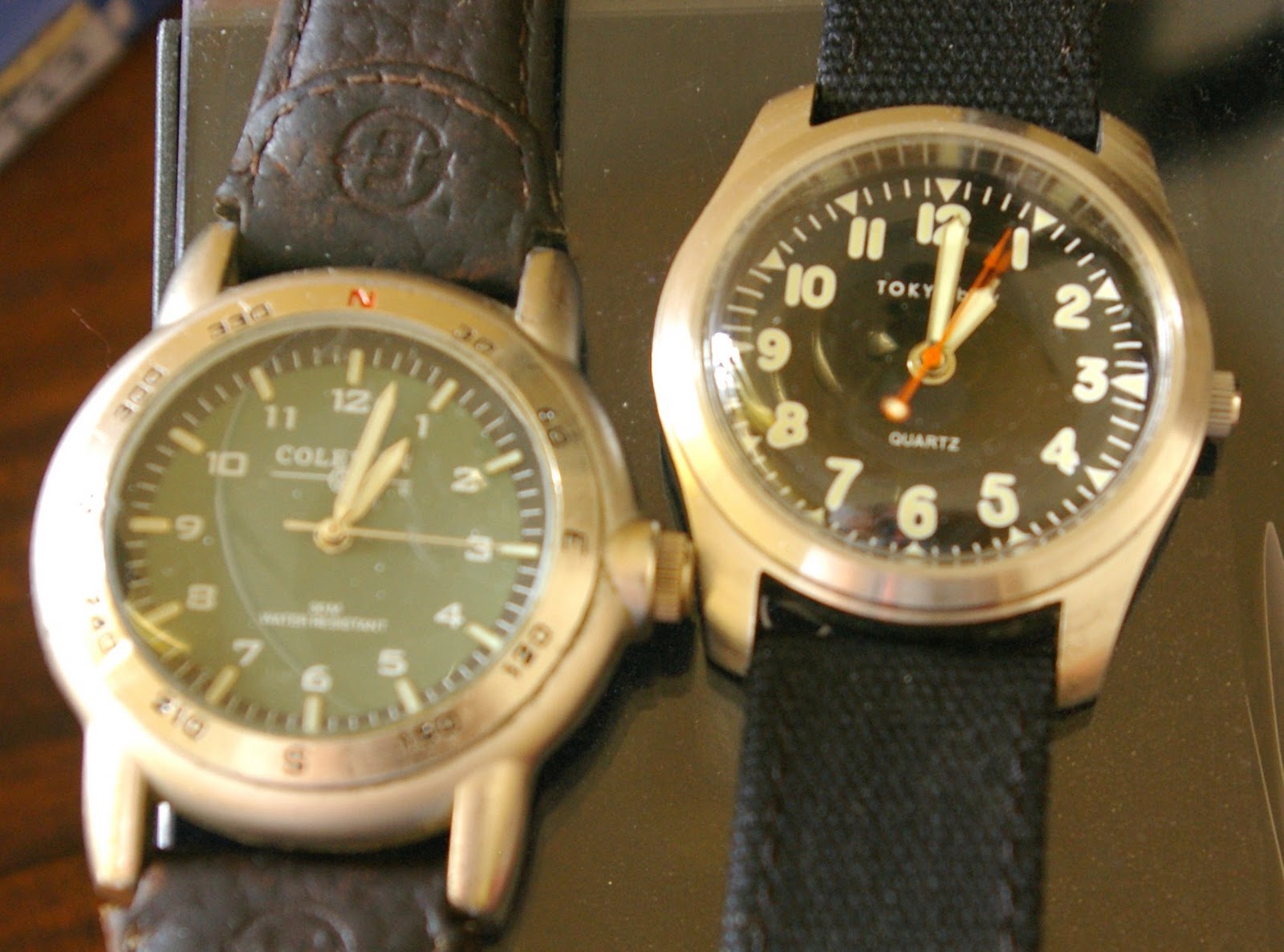
Time: A critical item for success. Almost never will enough of it be taken by bad writers which leads to lightweight or poor literary productions. (See Drivel, Utter above.) Good writers always want to take too much time. (See Adams, Douglas  above.)

Keyboard: A series of Chiclet-like plastic, springy thingies with alphabetic characters on them that when pressed randomly generate horrible writing and when pressed intentionally, more often than not, generate Utter Drivel. A keyboard should never be trusted.

Delete Key: The master control switch that allows one to leave Planet Frozen Muse in a flash. Using this key in conjunction with "Select All" will remove all traces of Utter Drivel and immediately launch one in new directions. (See "Restaurant" "Bar" above.)

Justin Bieber: Person with odd surname in the early 21st century about whom too much Utter Drivel is being written. All writers should use force field protection in presence of J.B. U.D. to avoid contamination of thought processes.

Rave Review: Whatever one's mother and one's friends always say about your writing.

ItTrulySucks.com: Imaginary website where you have nightmare visions of capable critics posting their honest opinions of your best-intentioned work.

Short Story or Poetry Contest: Opportunity to submit one's writing and a $20 fee in order to fund someone else's writing success.

Sanity: Rare among first-rate writers who seldom or never frequent Planet Frozen Muse. Sanity may be an ideal quality if one wishes other people to be around you, but it will get in the way of one's writing like a locked escape hatch.

Van Winkle Project: A frail, outer-galactic writing vessel of the variety "blog" which at least twice a week has successfully (so far) dodged Planet Frozen Muse, but its pilot's hands are white from gripping the wheel and he just requested another cup of coffee be brought to the bridge while muttering beneath his breath, "Don't panic!"

- V.W.

.

Tuesday, March 15, 2011

Reaching the Six-Month Mark: A Quick Update

As of today I have "slept" away one-half year of news, entertainment, sports and weather.

Even though in my mind this represents a notable achievement, I recognize that any celebrating would be massively premature. Read on.

A day ago my brother emailed me. He was wondering how I'm doing. More specifically he wanted to know if I've been able to continue to sustain my 21st century imitation of Rip Van Winkle in light of certain major world events:

   How's your news blackout holding up?  I checked your blog
   to see if it might have cratered on the weight of recent events,  
   but I see no evidence of that.  I expect to see a posting soon
   explaining how impossible it is to stay completely unaware of
   what goes on. 

To my brother, and anyone else kind enough to read this, I want to say that I haven't cratered. But my brother is right. There's suddenly been more of a challenge than before if I want to remain ignorant of what's happening in the world.

AN UNEXPECTED COMMUNICATION
On Friday,March 11 an email from a colleague addressed to all members of our English Department arrived in my in-box:

    Good morning,

   Many of you remember our former grad student, NAME OMITTED,
   who is currently teaching in Japan.

   She communicated through Facebook that she is shaken,

   her apartment "in shambles," but she is unhurt.
   Remember her in prayers as she will feel both vulnerable and lonely,
   but also as she will have many opportunities to minister to those
   around her

Oh my. What does that sound like? Duh. An earthquake in Japan, one of the most earthquake-prone regions of the world. In the next couple of days I overheard enough people speaking the word "Japan" to sense that a disaster there had captured their attention because it was devastating.

I WILL REMAIN RESOLUTE...I THINK...
This sounds frightening. It's the kind of thing where under normal circumstances I would immediately seek out photos and then hope to read tales of survivors or people being rescued.

At a minimum, I want to glance at some headlines and get a sense of the dimensions of what is being dealt with.

What I really want to hear is something positive along the lines that the number of those who perished is perhaps fewer than was first thought.

How many people died? How much was destroyed? I have no idea...

I can't let myself go in that direction. I won't know what happened when the earth shook until Sept. 11 and the end of the Van Winkle Project rolls around. - V.W.


.

Friday, March 11, 2011

The Spelling Bee and D-a-d-d-y

Speller No. 9 is studying word lists right up to the last minute
I acquired a bit of local news this past Saturday in the only way permissible as long as I'm engaged in this project. I didn't need to read it in the newspaper or find it on the Web or see it on TV.

I lived through it.

There I was seated and yawning on a Saturday morning, in an auditorium full of parents and family members. We were steeling ourselves for the city-wide spelling bee.

I now know something that I didn't before.  I know who won that spelling bee. More importantly, I am coming to terms with the contradictory fact that I like spelling bees except when I don't like spelling bees.

CARPENTERS OF LANGUAGE
What I like about spelling bees is that we have a rare opportunity to witness a word under construction. The pronouncer at the podium says the word and the student speller hovers over the microphone, mentally preparing to make for us a thing of beauty.  The lips part, the mouth opens...

p-a-d-d-o-c-k

In those seconds, human breath creates acoustical waves that are no mere noise. The speller peforms a feat only our species is capable of. From organized sounds emerge symbols representative of our language. These symbols adhere to one another in such a way as to allow us to communicate without being physically present. That is why you can read this sentence made of up these words and know what I am communicating. Yet where am I at the moment you read it? Far, far away... in distance and in time.

As much as the word-nerd in me likes hearing words spelled, there is a certain situation that leads to my not enjoying the spelling bee. It is when our seventh grade son is up on stage, hammering and sawing and putting together a word letter by letter. An all expenses-paid trip to the National Spelling Bee in Washington, D.C. this June awaits the winner. The suspense kills me.

c-a-r-t-o-g-r-a-p-h-y

If at any pont he says a wrong letter, it's in the air and in microseconds it enters the judges' ears and registers in their brains, and now it can't be taken back. His word house collapses, a fact that will be soberly registered by one of the four judges sitting at the table who reaches toward a bell.

Ding!

And this is what eventually happens. In the wake of the misspelling, our son, following directions, walks off the stage and goes to the "comfort room." Waiting there are cookies, bottles of water, and his mom who gives him a hug and whisper in his ear that it doesn't matter; we're proud of him.

A WORD NOT HEARD
So our son didn't win. He didn't totally lose either. The city-wide event began with 21 students, fifth grade through eighth. They each had won a spellilng bee at their respective schools, public and private. They were the best spellers their institution had to offer.

Less than an hour later there were 16 empty chairs on stage. Our son was one of the remaining five spellers still in contention.

To ease the tension I felt, I thought of the weeks he'd spent in preparation. He took his study lists of words and read each word out loud multiple times to impress it like a physical thing into his mind.

The word might have been a stone and his brain damp mud.

He would say the characters in sequence over and over:

c-o-m-m-e-n-s-u-r-a-t-e...c-o-m-m-e-n-s-u-r-a-t-e...

Then we quizzed him on the words. It was during this process I realized that there are words that I know the meaning of and use from time to time in my writing, and perhaps--on a good day with a strong spelling wind a my back--I can even spell them correctly, BUT I've never heard anyone deploy them in a sentence. This means, lacking an audible model, I am uncertain of how to pronounce the word.

It turned out there were many words like this on the spelling bee list that troubled me in this way.

Is wainscot pronounced "wayne's cot" or "wayne-scoat"?

VOCABULARY DEPRIVATION
It's been said that Shakespeare must have known around 60,000 different words although I've heard that an actual word count of his plays and sonnets yields a figure far lower (17,500).

The English language's No. 1 wordsmith...Will
In any event, Elizabethans had the opportunity to be "ear-witnesses" to Shakespeare's command of the English language which by all accounts was prodigious. Presumably, if theater-goers were listening closely and often enough, they would come to know how to pronounce the most unfamiliar words themselves.

Using a word in everyday speech is key to keeping it alive and relevant to ourselves. Words that are never spoken, remain stuck inside books. They are like pressed flowers that await the day the book is opened. Then the word tumbles out. Brittle, faded. Not as useful and "alive" as one might wish.

But even if we know a lot of words, there may be constraining factors in our using them.
Speller No. 9 bides his time...

One doesn't want to use words others don't understand. And it might not be a good idea to sound too literary or as if we are "putting on airs" and bearing down with some kind of class distinction.

Our spoken vocabulary is further impoverished by the cultural influence of the vocabulary we receive from electronic media. The movies and television do not draw upon an extensive vocabulary. It's a simple if not simplistic word pallette.

And what can one say about texting? This medium turns fertile fields for vocabulary into parched patches of tiny screen views where only a few weedy shoots are allowed to sprout.

Shout wher ur wen u a min  Thx

This could be a reason why one study published in a journal contends that a teen in 1950 had a vocabulary of 25,000 words and that today's teen has one of 10,000.

TIME FOR A NEOLOGISM?
I face a problem that's not going to go away. With so few of us speaking actual smart, non-ordinary spelling bee-type words, even when I'm in a language-appreciative crowd, it's hard for me to use certain wordswithout risking mispronouncing them. I could sound foolish to some rare soul out there who has total mastery of the word.

I think we need a word for these words that out of auditory ignornance I tend to fumble as soon as they come out of my mouth. I wish to call each of them a...


DARE TO SAY IT...
Thanks heavens for pronouncing dictionaries which can be found on-line. Before that I had to turn to a physical dictionary, leaf to the proper word entry, and then try to decipher the esoteric pronunciation and accent marks.

It's much better to hear a real, albeit disembodied voice saying the word and then allow myself to imitate it. Which leads me to my partial personal list of "vergewords" that I'm still working on.

duenna
phillippic
Baedeker
bromeliad
jeremiad
pitchblende
coloratura
bravura
incunabula
apparatchik
pampas
cacao
ecru
recidivist
megalopolis
tritium
potash
isinglass
peloton

If you hear me saying one of these words and mangling the pronunciation, please give me credit for trying. And then after my cookie in the comfort room, you may kindly, so kindly correct me! - V.W.


.

Thursday, March 3, 2011

On Not Being a "Blog of Note"

Are the folks at Blogger watching VWP? Not likely!
When I began this blog it was a logical way of keeping track of the mental and emotional ups and downs of my project of avoiding the news. I went into it mostly ignorant of the larger world of blogging.

At the same time I was excited by the opportunity to write in perhaps a new way in a medium that allowed me to combine pictures and words. As I saw it, I would be publishing my own digital magazine articles reflecting my life and my sensibilities.

Because this "blog-zine" is solipsistic at heart, i.e., about me, I initially never expected very many people to come to it, much less read it. Hugh Hefner has Playboy, Oprah has O, and I have VWP. Come on. There's no comparison! I do not have what one might call a "competitive lifestyle" that will attract avid, loyal readers.

But early on there was a surprise.

Blogger allows one to peer behind the scenes using the almost magical "Stats" tab. I could see how often people were coming to my site hour by hour. At first traffic was slow, but I never found myself staring at an insultingly flat line.


This is where I was tempted to become grandiose. My favorite writers seem to prove over and over that if you write well enough you can make almost anything interesting. And if it's interesting, people will find it and read it. That became my goal. I would write so well that I would magnetically attract more people.

I spent hours polishing my prose. Upwards of eight hours per post. And I began dreaming of becoming a Blogger "Blog of Note". If I achieved such an honor, perhaps my pageviews would spike in an Everest-like fashion.


At that point somebody needed to slap me. I was out of my mind.

WELCOME TO REALITY, VAN WINKLE
The growth in the blog phenomenon is stunning. According to the people who have the electronic means to achieve a rough count, in  2001 there were 2 million blogs. By 2005 we were up to 50 million. In 2009, according to BlogPulse, there were126 million blogs.

Take all the bloggers in the world...
try to fit them into the UK. Ugh!
This is more than three times the entire population of the United Kingdom.

Since the Van Winkle Project has placed me more squarely on the Web than ever before, I've become aware of just how widespread blogging is. There are blogs for everyone, including companies and corporations. When I tell people about my blog, they usually mention they started one, too. If I go to their blog and click on their "About Me", I often find that they're being modest: they've started multiple blogs to reflect different interests and audiences they want to address. 

So out of this rising number of blogs that has become an ocean of language and imagery, each week the wise, innovative, and very nice folks at Blogger (no, I'm not sucking up) choose a handful to join their "Blogs of Note" and  they post the links on Blogger In Draft.

If as a blogger you seek pageviews, becoming a "Blog of Note" is the equivalent of winning the lottery or lining up five cherries on the slot machine. When it happens, your pageviews and followers will jump as if a 9.0 earthquake has rocked the sensitive needle on the graph.

As I continued to fantasize about the Van Winkle Project becoming a "Blog of Note" (because no one had yet slapped me) I saw cause for hope. My Blogger data showed where my pageviews were coming from. What was this? Slovenia? India? Singapore? Columbia? New Zealand? Wow! Van Winkle had gone global!


Blogger's helpful visual about where people who have visited this blog are located.

The wheels began to spin in my mind. If I became a B.O.N., I could put it on my curriculum vita (this is the name the university world gives a "resume"). I could tell my friends! In the midst of his own newsless project, Van Winkle would have fabricated his own news!

                      
THE TANTALUS FACTOR
After a while I began to realize how out of reach the entire fantasy was. Blogs that are truly "of note" get as many pageviews in a day as I've accumulated in six months. Why movie critic Roger Ebert had 104 million pageviews in 2010! How many per day is that? Never mind; you do the math...

This is when I thought of Tantalus. He was the son of Zeus who was given special dining privileges and could eat nectar with the gods.

But one day he offended the gods (the accounts vary as to why). Because of this, Tantalus was perpetually punished in a most devious fashion.

He was placed in a locale where every time he tried to bend down and drink from a pool of water it receded. If he reached up to a tree to pick fruit, the wind blew the luscious, juicy orbs beyond his grasp.

He would always be close but never quite able to satisfy his basic desires.

From the tragedy of Tantalus we get the verb "to tantalize." It's a verb that applies to me. Every time I think of being a "Blog of Note" I am tantalized. It's a crazy way to live.

HOW NOT TO BE A "BLOG OF NOTE"
Rather than live a life of being constant, unfulfilled craving, I've decided I do not wish to attract mass followers by becoming a Blogger "Blog of Note." Should you blog from time to time and feel inclined to follow in Van Winkle's nearly invisible footsteps, here are four sound tips on how to achieve this kind of ideal non-recognition.

1 - Simply exist.
That's right. As soon as you create your blog you virtually guarantee that no one of significance, including Blogger, will get around to visiting you. There are way too many blogs out there.

2 - Have a laissez-faire attitude about graphic images.
Every time I upload an image to a post, Blogger gives me a message that some images are copyrighted blah, blah and I should take this into account. For that reason I prefer using my own photos, but frankly that's not always possible. If I violate anyone's intellectual property rights, I will cheerfully remove the image when they request. But this is the Web. Images are strewn like confetti in a wide city street. Who can resist picked up a few pieces? So my blog is not "pure." Can I still be a "Blog of Note"? Does Miss America have to be a virgin?

3 - Write posts that are more than a few hundred words in length.
This is a great way to guarantee that even if someone lands on your blog they won't read it. When they see that it will take more than a few seconds to find out what's there, they're on to the next website. I've decided because I'm a writer, what I have to do is write. I'm not going to write more than is necessary, but I'm not going to ration my words or truncate my thoughts any more than a composer would try to alter a twenty-minute sonata for piano forte to conform to the length and format of a cell phone ring tone.

4 - Start a year-long project.
Come on., Van Winkle. This has been done! No one likely cares about a year-long project unless one's life hangs in the balance. If a person wants to attract notice, he or she is better off blogging about popular niche subjects: music, movies, food, travel, crafts, hobbies, politics, pets, and pole dancing.

AT OCEAN'S EDGE...
At the Van Winkle Project I blog because I gotta blog. Each time I post I think of it as being like building a sand castle at the beach.

As I look up and down the beach I notice nearly everyone is building their own castles. But this is not about them or the rare visitor who strolls along and compares our sand castles and says one is "of note" and, by implication, the others are not. In the great scheme of things the incoming tide of time rolls over each person's castle and he or she must build/post a new one as soon as the tide goes out again.

So why do this? Because those ephemeral castles are are a result of one's best thoughts and creativity. Within the sandy digital walls I erect, I place the essence of my hands, breath and heartbeat and I communicate, "I'm alive. I was here." - V.W.


Get yours at Toysplash.com
and start digging...
  
.

Wednesday, March 2, 2011

Review of My Typewriter (or Keys on Ice)


Today the two-tone blue Smith-Corona portable sits on a high shelf. I've owned it since I left for college, a young man with stories filling his head.


About thirty years ago something came between us and it changed our relationship.

It was like a comet colliding with Planet Earth. Wham! The world shook. A puff of dust obscured reality. Then the dust settled. I'm talking about the arrival of a new technology. We shook our heads in wonder. Then we began using this enticing thing that had come into our midst and offered so many advantages.

This was in the 1980s. The computer age had arrived. My typewriter, essentially, died right where it stood...

When the Mode Becomes the Muse...
As everyone knows, the computer easily won the allegiance of 99% of writers, including Van Winkle. How could it not? It offers an easy way to correct everything from misspellings to an infelicitous phrasing.

Let me take a second to type out the computer's chief competitive advantage for everyone to see:

A computer = Free do-over

But I think there's a way in which my old hunk-of-steel typewriter remains the forgotten king of the technology heap. It's true. The typewriter is the original all-in-one device.

The typewriter is also the printer.

The practical implication is that a typewriter has always required a high degree of commitment to whatever one is writing. Think a thought and communicate it to your fingertips and it will appear a second later on a piece of paper in black ink.

Think, hit, print.

It's going to require a lot of erasing or some stern swipes of Wite-Out to take the words back.

For this reason, tentativeness and hesitation and endless backspacing, highlighting, deleting, and paragraph moving have no place in the typing-writing process.

Instead, it's like standing in a corner at a party and spotting an attractive person.

Without rehearsing over and over in the mind a pickup line and the proper je ne sais pas quoi inflection, you get your fingers in the right position, walk up to that person, and you smile. And then you lean forward and start "typing" what you have to say and every word had better count...

Hello. You look like someone interesting.
I'd like to get to know you if you'll let me...


Exploding Typewriter
It must be recognized that typewriters are not without their drawbacks. In fact, I know of some writers who have had major problems.

In The Writing Life Annie Dillard tells of the time she was upstairs in her house and she heard a rumbling from below. She found the source of the ruckus downstairs in her study where her typewriter was glowing and smoking. Before her eyes it grew worse:

I saw at once that the typewriter was erupting. The old green Smith-Corona typewriter on the table was exploding with fire and ash. Showers of sparks shot out of its caldera—the dark hollow in in which the keys lie. Smoke and cinders poured out, noises exploded and spattered, black dense smoke rose up and a wild, deep fire lighted the whole thing. It shot sparks.

This all too absurd fantasy ends the next day when Dillard cleans the typewriter and announces, "I have had no trouble since." Then she adds an amusing note of frisson in the final sentence of the chapter:

Of course, now I know it can happen.

Getting Hammered
In 2002 Judy Blunt published a memoir entitled Breaking Free. In it she told of her depressing life as a young wife on a Wyoming ranch, which led to her fleeing said ranch. The book caused some controversy.

The problem was a scene in the first chapter of the book in which Ms. Blunt dramatized how her father-in-law, angry because she was late bringing lunch to the table, came into her room where she had her typewriter. He took the machine outside into the yard and beat on it with a sledgehammer.

Please don't destroy this typewriter from the 1930s.
It's gorgeous and I bought it as a collectible!
When the book appeared, the father-in-law, highly irate and perhaps feeling a bit litigious, said this event never happened.

A red-faced Ms. Blunt had to admit that she had exaggerated the facts to heighten the conflict.

In truth the incident involved the old man pulling the plug on her electric typewriter and shouting at her. No sledgehammers were involved.

I'm glad the author made a public correction in an interview. Because, you see, I was having trouble understanding why anyone out West would try to kill a typewriter with any kind of hammer.

The man was a rancher! He should have run over the typewriter with a tractor or a pickup truck until it resembled shiny roadkill.

Or he should have taken it down to the river and thrown it in into the deepest whirlpool.

Jack Kerouac's typewriter
As I see it, typewriters deserve respect. Even when you're killing them. You're not executing some knave but veritable royalty.
Just think of Jack Kerouac typing On the Road on a 120-foot long "scroll" of paper he continuously fed through his typewriter.

Such a BIG and WORTHY machine should die a notable death.

With a bang, not a clang!


Typing Posture
In the days of yesteryear I drafted all my fiction by hand on either notebook paper or within the pages of ruled notebooks. After that I turned to the two-tone blue Smith-Corona typewriter to produce the final product. I wrote a collection of short stories and a novel with that typewriter, both of which were published, but I didn't connect this success to the typewriter. The computer came along and whisked me away for the remainder of my writing life.

Still, I remember well how those early works required the hard labor of typing multiple drafts until I got the words right. When I add it up, I realize several thousand pages rolled through the typewriter just to produce the sum total of two books. The work was so physical that my back began to hurt.

So I learned to type standing up.

This was about the same time Elton John became famous for kicking over piano benches and acrobatically banging the ivories from an upright position. Crocodile Rock! Bennie and the Jets! The crowd went wild. In my empty apartment the only sound was the keys clacking and my occasional sighing. But my back? It felt a whole lot better.


Rating
The Smith-Corona has remained in my life, albeit at the margins. After I began teaching at a university I placed it on a table in my office on campus. When our son was a toddler I took him to the office and, fascinated by the chrome return bar and those tantalizing keys, he urged me to shove a piece of a paper into the slot, roll the platen, and have me help his little fingers poke at the keys and print a few words.

It is magical.

Most of the time when I stop using things, I get rid of them. They get traded in like my cars or they go to a garage sale or Goodwill or end up in the trash can. Not my typewriter.

Both the typewriter and I know. My computers are convenient, lightweight, and quick, but I'll never save a computer and enshrine it on a shelf. The computers are casual, colorful affairs, the typewriter is someone I've loved. Its key pressure and clacking sounds and dinging return bell and its twenty-pound weight are aspects I know intimately.

Just look at you, Smith-Corona. You traveled from Anchorage, Alaska to go to college with me in New Haven, Connecticut. You got me through a nearly 100-page senior economics paper. Whew! In your greatest feat, you churned out pages that were mailed to New York City and eventually they came back to me in published form. And those are just the highlights. That's reason enough to rate you four stars **** - V.W.