Monday, December 13, 2010

Review of My Dictionary

Is there an iPad or one of these in everyone's future?
I have a friend who is what used to be called a "booster." Boosters once were commonly found lurking among Rotarians and other such groups of business people. They were quite often loudly heard boosting the latest greatest thing that was, incidentally, likely to make some people in suits a lot of money. A power plant, a factory, a new subdivision.

When it comes to digital technology, especially the use of portable versions of the computer (e.g., iPhone, iPad, e-readers), my friend sees almost limitless possibilities for their use in education. He emphasizes how through these devices a cornucopia of knowledge on the Internet can be delivered to students at anytime. Simultaneously students can use the devices to easily connect with peers and discuss what they're learning.

 booster: 1 a person who  boosts; an enthusiastic supporter     

In his enthusiasm my friend goes around the country, and sometimes overseas, and delivers speeches about what is unfolding. He says the change we're looking at is a on par with  the one wrought by Gutenberg's printing press when, for the first time, books potentially could be made available to the masses, not just to the wealthy or a cloistered religious elite.

He forecasts the new prevalence of the digital version of ink (especially once all the old books are scanned into the new system) will soon allow each of us to hold in his or her hand all the world's writings from all eras, past and present. There will be no barriers to information in terms of time to acquire it or having to relocate ourselves to access it. It will all come to us instantaneously.

This means books, as we've known them for centuries--physical volumes housed in libraries and bookstores--are essentially dead.

He may be right. 
Or it could be that he's only partially right. Or it could be he's completely wrong.

Our son, who at age 12 is savvy beyond his years, reminded me when we were out walking last night how the Victorians thought steam was final word in technological marvels. Once they had steam in their factories and driving their ships, they thought it was only a matter of time before everything would be powered by steam. Horseless carriages. Crafts for flying through the air. But the Victorians were wrong about steam. It's heyday was something less than a hundred years.

About the only steam-anything you'll buy today is a steam iron.

The Good, The Bad, the Jury's Still Out: Even if my friend is correct that books and book stores and libraries as we have known them are bound to go away, I'm not prepared to concede that every aspect of "new" is "better." In fact, if I consult my dictionary, nowhere in the definition of "new" am I told that "new" always equals "better."

Of course, sometimes the new thing brought to the market is indeed better (caller ID and men's briefs are two of my favorites), but sometimes it's eventually recognized as bad (DDT and Yugos). Most often what is new is a confusing mix of costs and benefits (women's high heels and Dipping Dots).

Digitizing Our Books: It's easy to see a benefit to having books available through electronic devices. When I travel I don't have to pack up the heavy things and squeeze them into the overhead bin on the airplane or pay to check a bag containing them. I can even foresee the day when I will rejoice that our son's textbooks are offered to him digitally and he can put away the crippling 30 lb. backpack he lugs to school each day. The portability of e-books is a decided advantage.

But there may be costs the boosters have not recognized yet.

Start with the promise of access. Is it always really good that I stay deep in the couch cushions at home and pull up book after book with a tap of my finger? Frankly, I enjoy driving to my downtown library and following the numbers on the shelves until I find the book I seek out. Of course, the entire process is far from instant, taking me about 45-minutes round-trip and, yes, I will burn fossil fuel when I drive my car.

  enjoy: 1 to take pleasure or satisfaction in 2 to have for one's use, benefit

But on the other side of the balance sheet, in the library I will meet adults and bump up against excited children. I will smell the books. I'll smile at the woman who checks out the books. I'll even do enough walking that a few calories will be burned as opposed to staying at home on the couch. So there's an entire social, physical, and mental health benefit to the process.

And still another benefit awaits me when I get home with my analogue version of the book. As I sit down and open up a physical book, I am able to experience the sensation that knowledge and words have weight and texture.

She's So Heavy:
Meet my dictionary. If it were human, it would now be old
enough to have graduated from college. But could it find
a job in this down economy?
The mention of weight brings me to just about my favorite book. It also happens to be the largest.

As I pick up my Webster's Third College Dictionary and thumb through it, what I balance in my lap amounts to a heavy portion of the best of what our language has to offer. How heavy? I decided to take the dictionary to the bathroom scales.

Four and a half pounds! But actually that is nothing.

If I want the complete riches of the English language, then it comes in a Vatican-size residence for the text: the Oxford English Dictionary in twenty volumes.

A few years ago a man in England named Ammon Shea read the entire OED which amounted to 21,731 pages. He read some days for 10 hours straight and it still took him a year to get through the entire work. It was hard going, but he reported in the book he wrote about his experience that it was also rewarding. Obviously he learned some new words. A lot of them. But he also thought the panoply of vocabulary had aspects of reading a great novel.

                    
                              Ammon Shea at work reading...the dictionary.

Word Fights: The dictionary figures in one of my favorite classroom stories from college. 
John Hersey 1914-1993

When I was at Yale I was fortunate to be able to take a creative writing class from the writer John Hersey. Hersey was a tall, patrician man and the author of many books and novels, including the bestsellers A Bell For Adano, A Single Pebble, and Hiroshima, the latter being the definitive on-the-ground account of what it was like when the first atomic bomb was dropped.
Everyone was in the class because Hersey represented a rare chance to study writing at the feet of (intake of breath) a Famous Writer.

Hersey was kind to me. Believing I had notable talent, he personally submitted a story of mine to The Atlantic Monthly. He was also fairly acerbic as he upheld the highest standards in writing. One day he began bashing the dictionary. The dictionary? Yes indeed.

"In Webster's Third, damn them, they've made 'nauseated' and 'nauseous' synonyms. They've destroyed a perfectly good word," he lectured. "Soon we'll all be reduced to just making grunts!"

Hmm. This sounded serious. My profs, especially civilized ones like Mr. Hersey, didn't usually cuss. But perhaps it was called for. People grunting throughout the day did seem an unpleasant prospect. As Mr. Hersey backed up and gave us some definitions, I understood why he thought the new version of the dictionary was doing us all a disfavor.

That day I learned from the writer (and never forgot) that "nauseated," means "I feel like I'm going to vomit." "Nauseous" (pre-Webster's Third) can only mean "capable of inducing a nauseated feeling in someone" as in "They encountered a nauseous odor." So if someone pre-Webster's Third said, "I feel nauseous," they were actually (stupidly) saying, "I feel like I can make other people throw up!"

But Webster's Third, in a language liberalizing move, had added a second definition to describe how some people misused "nauseous" when they really ought to say "nauseated." For an old-school fellow like Mr. Hersey this was a red flag in front of the bull. A dictionary ought to prescribe, not describe; otherwise, the misuage was legitimized.

All right, good and well. Still, I also could see how people confused the two words and meanings. Doesn't saying "I feel nauseous" just sound, well, more sickly, more nauseated?

The larger lesson stayed with me in any case. Words are important. This is a creedal statement for anyone who even dreams of being a writer.

  creed: 1 a brief authoritative formula of religous belief 2 a set of fundamental beliefs


Consider just one page of the dictionary...

Dictionary Adventures:
A number of years ago I wrote a novel that I never could get published. The heroine is a famous but disenchanted Hollywood movie star who slips away to a small seaside town in Oregon. There she meets a man nicknamed Shep. Shep is a fisherman whom everyone regards as a sort of holy fool. Shep is always talking extravagantly about the nature of reality, the sheer miracle of it all. One day he pulls out a staggeringly massive unabridged Webster's, turns to one of the "C" pages, and starts lecturing the actress on the definitions . As he nears the end of his two-page soliloquy he's  really getting worked up.

            "And we must not overlook coriums, attached to every bug! Here we find the long middle part of the beetle’s wing. What can that wing do? It traverses great distances and, just as easily, folds up and disappears beneath the streamlined armor in order to join a body waddling across the hard ground.
            "Oh! The coquilla nut! You’ll find it in the top of the piassava palm that grows in Brazil. Break open the nut and smash and knead its meat and you obtain rich oil. However, do not discard the hard brown shell. Touched by human hands and tools a different result is derived. It can be carved and polished like the finest ivory.
            "Please don’t forget the short tale of cordierite. Formed in the fiery belly of the earth it is coughed to the surface. The colors dazzle the eyes of those who pick it up and hold the bluish crystal in their palms. And it finds its way into necklaces and jewelry and where it has often brought delight to kings and queens.
            "And I still have not told you of the coquito, that palm of Chili whose sap is sweet and becomes a tongue tingling wine, or the impossibly beautiful Ionian isle of Corfu, or the amazing coreopsis, those plants with dazzling yellow, crimson or maroon flowers, or the cordgrass that grows ten feet high in the middle of forbidding tidal mud flats, or the delicately drooping pink and white flowers of the coral bells blooming nearly half the year on our own continent, or the deeply hued Cordovan leather, made from fine goat skins obtainable in Spain, and the men and women who walk the dusty roads in shoes made of it.”
            Shep stopped speaking.  He reached a hand to his forehead.  The fingers stayed there as if feeling the after-vibrations of his own thought...         

Rating Time: My character's point is that the dictionary is not just information. It's a collection of names for wonders that humans have encountered. Every entry there contains a story. The words have dimension because they are attached to human actions and thoughts. Holding the book in our hands, running our fingers over the paper as we turn pages, picking up a pencil or highlighter and rubbing our own response into the page encourages us to realize this dimensionality.

I treasure the dents on the cover as well as the barely visible
Simon & Schuster logo in bas relief.

But what happens if we flatten all that out digitally? I would have no Webster's 3rd with beat-up indents in the cover and creases in the pages. Using a computer as the sole source of my information I would acquire words the way someone who is fed through a tube gains calories. The tube does its job, efficiently and quickly, yet the flavor and the pleasure of chewing have been removed.

I've had my trusty Webster's Third for 22 years. It serves me well. Since I'm enough of a language liberal to overlook the "nauseated" and "nauseous" scandal, I can give it without qualms four stars **** - V.W.

.

Friday, December 10, 2010

How to Do Something Esoteric and Useless Too!

Today’s replacement for the news is a practical lesson in how to do something
that possibly few people on Planet Earth have undertaken.
But I have good tidings. At this blog we do not abuse readers. We're not going to ask anyone to hold his or her breath under water for 30 minutes. No one will even ask you to try to cook French soufflĂ© that doesn’t fall. You won't be encouraged to figure out decades too late how to stop the 12:00 from flashing on a VCR.

This one is e-a-s-y!

First, Check Your Shower and Tub Area
Conduct an all-out sweep of the entire area, paying special attention to drains, ledges, and soap dish areas. Here's what you're looking for:

SOAP SLIVERS

The expected thing, of course, would be to take your soap slivers, wet them, and mash them all together into a single frightening clump that resembles something regurgitated by one of your pets, and thus extend their life of cleansing. This is classic household advice.

We won’t do that. That wouldn’t be esoteric. It would also be very much like a certain longtime newspaper column.

Isn't That Handy (Thrifty Too!) 
Whenever I picked up the lifestyle section of the paper and happened upon Hints From Heloise  her readers were always up to the same thing--sharing wild and revolutionary innovations that not only extended the monthly budget dollars, but turned the home into a pragmatic but aesthetically pleasing sanctuary, a vertitable Americanized Versailles...like Louis without the 'Quatorze,' just "Louie Louie".

Not necessarily dishwasher proof.
Dear Heloise,
I receive so many of those address labels sent by charitable organizations, but I don’t write letters anymore. So I take the labels and cover a coffee mug with them and give the appliqued mugs as gifts to friends. That way every time a friend drinks from the mug she’ll think of me and remember where I live. And if we’re no longer friends, I stick outdated labels on the mug. She’ll look for me in the wrong city. Sucker!
         Signed,
         Peppy in Poughkeepsie


Dear Heloise,
My husband drinks a lot of wine, too much wine, but that’s another story (ask his friends in AA ha!). The problem is that we end up with a lot of wine corks which I just hate to throw away. I finally realized what they’re good for. I stick toothpicks in them and, well, that’s it. I place them by each dinner plate when I have company over for pasta and everyone just marvels at my “Tuscan toothpick holders.”
                 Signed,
                 Tired of Tipsy in Tucumcari

At dinnertime place it in front
of the knife where it will be handy.
Close-up
Okay. I made those up. But the following is actual world-real experimentation on behalf of all those seeking to do something around the home at absolutely no cost to themselves, others, or the environment.

Back to the Task At Hand
We will re-purpose the soap sliver in your bath or shower into an object with no purpose whatsoever. (So really it’s not technically “re-purposing”, is it?) This simple project allows you to take the remains of the humble household item that once served you well by lathering your skin and carrying away dead cells, dried sweat, and other signs of being a bipedal animal species prone to funk and filthiness, and in 5 minutes voila! (as Louis XIV would say) you will have turned said slivers into something even more humble.

Step 1
Get a knife. Find a solid cutting surface.

So far, so good!

Step 2
Shave the soap sliver into fine cuttings or, alternatively, chop it up like you’re shredding a parking ticket you absolutely refuse to pay.

Be careful here! See cautions below.

Step 3
Examine what you now have.

Congratulations. Looks interesting...and useless.

Step 4
Place the slivered soap slivers into a zip-loc bag because zip-loc bags are ideal for everything.


Step 5
Hide the zip-loc bag with the slivered slivers of soap beneath a random couch cushion where you’ll be sure to forget about it.


Step 6 - Enjoy!
Open a bottle of wine, pour it into an address label appliquĂ©d coffee mug, and drink deeply while using the wrong end of a “Tuscan toothpick holder” to poke yourself so you’ll always remember that you haven’t had this much fun in a long time!

 A Very Brief History of Soap                                                                                      
 Frankly this sounds disgusting, so there’s no point in going on at length. Apparently, until a scientist had a break-through in the early 20th century, all soap was made from animal fats that were heated up and mixed with the equivalent of ash. Wow, let’s wallow in some ox and goat goo with a nice side of charcoal and get clean, people! Let’s even run our clothes through this putrid porridge! But it must be true because it’s on Wikipedia.                                                                                                                                                      

Cautions
  • Do not use any implement except a Swiss Army knife which may be purchased at the following link.
  • Do not cut yourself with the Swiss Army knife because it will hurt and you will bleed profusely and have to go to the emergency room.
  • Do not taste any curlicues of soap shaved by the knife that visually remind you of caramel or chocolate because they will not taste like caramel or chocolate only bad and you will have to have your stomach pumped in the emergency room.
  • Do not handle soap slivers containing a high level of radioactivity* because you will go to the emergency room, be admitted to the hospital, die a slow cruel death, and before your final gasp your hair will fall out and you’ll look like Chris Daughtry.
  • Do not go near any electrical outlets because there is always a potential for shock which will send you to the ER with hair that looks like Troy Polamalu, although this is survivable and it’s always a good idea to insure your hair beforehand.
  • Do not go near any one who wants you to wire money to an overseas bank account saying their mother is dying of cancer and they need to purchase 10,000 Swiss Army knives to sell as a fund raiser to buy chemo treatments for Mom in Nigeria.
  • Do not try to rub your stomach, chew gum, and say, “Tommy Tuna Took a Taxi to Tijuana” five times fast while you are cutting the soap sliver with your Swiss Army knife or you will end up, well, you know.
  • Do not speak to any personal injury or product liability lawyers for the next 90 days.
*To ascertain whether you have radioactive soap, purchase a $719 Geiger counter at this link.

The author does not represent any of the foregoing to be safe to either physical or mental health and can not be held responsible for any of the content therein because he was asleep at the time - V.W.

.

Monday, December 6, 2010

Colors of Autumn Verging on Winter

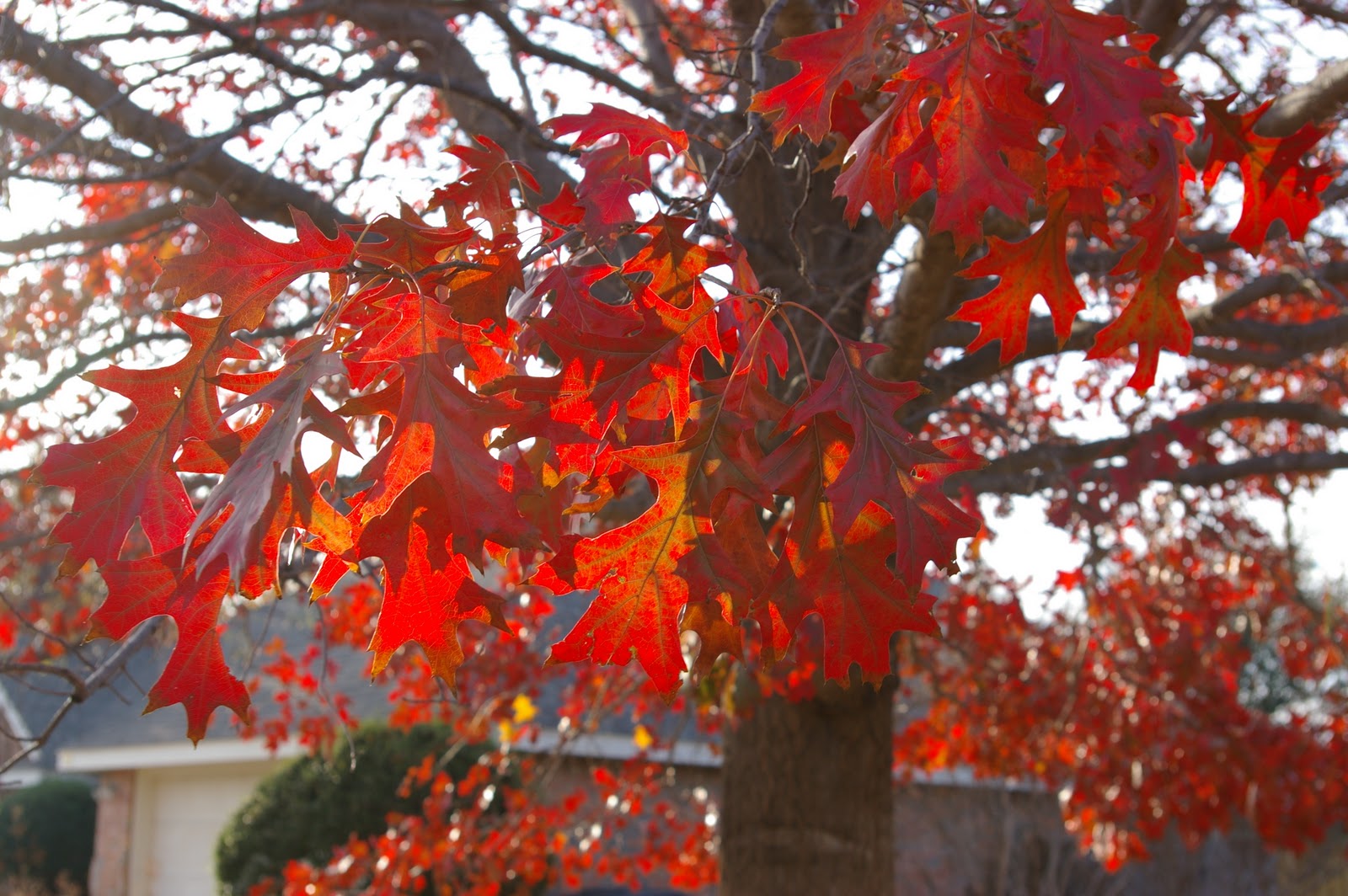
As I go for a walk around the neighborhood the leaves from November are still on the ground.

They pile up, they crunch under my feet, and a few blow away at a time. These leaves, deeply layered in the gutter, remind me of how I felt during another autumn long ago.

We were nearing the end of the year nineteen hundred and sixty-three and the world was about to change.

Bad News
In stating to the mildly curious the main challenge of the Van Winkle Project I often bring out a description of myself as a "life-long news addict." Life-long is a bit of hyperbole; it's actually only been most of my life. I can pinpoint, however, with some precision the beginning of my strong connection to the news. I have in my possession the first newspaper I ever felt compelled to save.


It was as if I had to carefully place the paper with its blaring red headline inside my cardboard box of childhood trinkets in order to verify that it was no dream. The man who was so witty, had the photogenic smile, walked beside the beautiful wife and two little children, that man, our president, really was dead. Cut down by bullets in the streets of Dallas about the time I was walking home from elementary school to have lunch.

It's still the saddest souvenir in our house.

A Conjunction of Events
It so happened at the time of this national tragedy that my parents had already planned a Thanksgiving trip for themselves and their three sons. It was to be the biggest and most costly trip we had ever made together. We were taking the passenger train all the way from Wyoming to visit my aunt and uncle in San Diego.

We would be boarding the long line of mustard yellow cars pulled by the Union Pacific diesel locomotive. For the next two days we would rattle along the rails day and night, making our way across mountains and deserts.


Our upcoming journey...marked in red.
 My pending excitement clashed with the shock and grief that all of us were experiencing. But the tickets had been bought, the plans were made. We would go.

Monday was the day of the late president's funeral and declared a "national day of mourning." We stood at the railroad station and moved toward the tracks where the passenger cars were dripping fluids and making strange chuffing noises. Right on schedule, about the time speakers were orating over the flag draped coffin of John Fitzgerald Kennedy in the U.S. Capitol building, we boarded the train.

Stay Within the Lines
We were hurtling into the empty spaces of the American West. The best views were obtained from high up in the vista dome car. Fenceless plains, herds of antelope in the distance, hawks circling the sky. At night a person could lie back and look up at the stars twinkling on the other side of the Plexiglas.

The vista dome car...
Though our parents were trying to economize, they had decided we could have another treat. We would eat in the dining car. A black man in immaculate white uniform led us to our table where we sat down to a starched table cloth and napkins, heavy silverware. We were handed menus. And coloring books and crayons for the boys.


Today that coloring book is also a part of my collection of childhood keepsakes. A couple of things in it stand out.

First, I can turn to the inside page and marvel at the introductory letter written to "Dear Parents." The second paragraph is remarkable for consisting entirely of a single 55-word sentence that would be more than slightly challenging to diagram with all its modifying phrases offset by commas.


Forty-seven years later would any one who wished to represent a major corporation to the general public dare to write to them in such a toney, literate fashion?

And the coloring book reminds me that more than the way we wielded language was about to change. Consider what the following pages say about what we today call "gender roles."


Ah, the gentle sexism of post-war America. Dad gets to bring home the bacon; Mom gets to cook it--except for when she's on vacation!

But it was a world I still believed in whole heartedly, In fact, in turning the pages of the coloring book I find the Crayola evidence of a little boy who questioned very little, who believed at that point in his life that success could be judged by one main criteria: coloring scrupulously within the lines. I sure did have that figured out...


Doesn't the boy color neatly?
 
Ships Ahoy!
When we got to San Diego we were greeted by my uncle who was a flight deck officer in the navy, responsible for the launches and landings of jet aircraft on board his ship. When he wasn't away sailing, Uncle joined his family in in military housing on North Island Naval Air Station. My uncle's ship? The mighty aircraft carrier, the U.S.S. Constitution, or as he and other sailors called it, "The Connie."

Uncle's ship, The U.S.S. Constellation
That was when my first disappointment arrived. We were able to take a harbor cruise past the moored destroyers and cruisers and I looked up, up, up and beheld the enormous CV-64, the Connie. Yes, that was impressive, but it paled next to what I had hoped for: a ship-board tour above and below decks. The tour was cancelled due to the Kennedy assassination.

From an ocean-level perspective I craned my neck to look at the red, white and blue flying from poles at the sterns of all the ships. They hung at half mast. Ship after ship. It was the same thing.

On the Beach
It was the oddest Thanksgiving. I have no memory of Thanksgiving turkey or pumpkin pie, although I know we consumed them. For those Americans of a younger vintage, imagine if September 11th attacks had taken place on, say, November 24th and a few days later you sat down to eat a feast and tally what you were grateful for. The juxtaposition of holiday and reality was jarring and painful.

Despite the metaphorical clouds hanging over the country that week, I did have one great experience lying ahead of me. For the first time I was going to be taken to the beach and see the vast ocean.

I couldn't get enough of it. The waves lapping my ankles, the sound of the water coming ashore, the way the air smelled, the feeling of the gritty but ultimately soft sand beneath my toes, the gulls screaming and swooping chaotically overhead. For a kid who was most familiar with alkaline gulches, sage brush and tumbleweeds on the Wyoming plains, this was like discovering a new planet.

And there were shells to pick up. Even finer, some of them, my cousin told me, were called "sand dollars." The ocean coughed up money! I gathered as many as I could, knowing even as a I did it that I would only be allowed to take home a few.

Photo by Royce Bair
Home Again
As we slipped into December, I was supposed to be thinking about Santa Claus and the toy I wanted under the Christmas tree, but I remained haunted by what had happened just a few weeks earlier.

The leaves had fallen upon our lives and it would be good while before they blew away, still longer before the season changed and something green came again into the world around us.

Back yard of our Wyoming house, early 1960s
I went out to the garage and found the loosely wrapped package containing the shells we'd brought back from California. I took the contents out to the concrete steps behind the house and laid everything in rows in the sunlight.

It was a rather warm winter's day in Wyoming, though you knew that it wouldn't be long before we saw our share of snow and ice.

For now I enjoyed the shells and how sand tumbled out of their hidden recesses. Soon the shell collection would end up in my bedroom. One day a sand dollar would be dropped and it would shatter in the floor. It would have to be swept up and thrown away.

Other changes awaited me. I would cease to think that the epitome of accomplishment consisted of coloring within the lines. Colors bounded by emphatically drawn lines would start to remind me of the world map and of places called North and South Vietnam. Those formerly obscure nations had caused my uncle and the Connie to sail to the Gulf of Tonkin. War would rage for years. Jets uncle watched take off would drop over 20,000 tons of bombs in 1968 alone.

Great blooming orange, yellow, and red explosions.

As history worked itself out, it would become tragically obvious that we could pour rivers of red, in the form of blood from over 47,000 of our dead and 200,000 wounded and maimed, and still we couldn't bring to pass what presidents and generals sought. We couldn't keep the colors separate and behind the lines.

As a reaction to a world that still wished to insist on rigid lines and well ordered colors, I would witness many of my generation being drawn to the brightest shades of light they could find, even ones that didn't "belong together." This era of the Peter Max poster and the acid trip has been called "The Sixties." It was really just a handful of years, a hundred key record albums, lots of improvised clothing outfits, many substances ingested perhaps too cavalierly, and two more assasinations.

Then it ended.

In college my roommates and fellow Yalies were intent on becoming doctors and lawyers and Wall Streeters, i.e., they were very much about coloring and staying inside the lines. Which, I tell my own son today, is valuable, is needed. Ultimately it contributes to the "glue" that holds society together.

But I can see now that I would never again be so much like that young boy with the coloring book. Though I would do the right things for the most part, I had read the news. And I knew what the news could do: take away your innocence, sometimes with a single headline. My assumption that everything was mostly fine was in the past. I was wiser now. The lines and the carefully chosen colors they contained could all be undone in a flash. - V.W.


Leaves down the street from our house. Still hanging on as of Dec. 5, 2010.
 

Thursday, December 2, 2010

Never Mind the Jackson Pollocks, The Abstract Expressionists Were Here

While we were out of town and staying in a different locale for a few days I decided to pass some time by strolling behind our lodgings to see what might be available to photograph. At first it didn't look promising.

There was a wooden deck and a barbecue grill. Beyond that, the most interesting trees were stripped of their autumn color. True, someone had hung a rusted, valveless coronet from a branch, but as photogenic as this venerable musical instrument sounds, every way I framed it turned out unsatisfying. I might as well have been photographing a giant paperclip.

I lowered my view. I started looking at the ground which was covered with the following:

                           - Leaves
                           - Twigs
                           - Acorns
                           - Deer droppings
                           - Rocks

Hmm. Interesting. I bent lower. The camera shutter began making the satisfying ka-chik sound. At that moment an odd thought occurred to me about nature. On this day and in this place it looked like modern art.

The Importance of Being Wilde: A Brief Digression

In "The Decay of Lying," an 1889 essay cast in the form of a humorous dialogue between two slightly bored young gentlemen (Vivian and Cyril), Oscar Wilde offers to the world his, at the time, revolutionary views on art. Using Vivian as his mouthpiece, Wilde contends for the absolute superiority of art over every form of reality. He's tired of people saying, "Oh, that's just art," as if art in all its forms is a harmless and not particularly useful child's play or mere ornamentation.

Wilde claims (through Vivian) that art is so powerful that it influences life and how we live. And he contends for an ideal vision of life that art can give us to compensate for the "defective" offerings of nature, about which Vivian loudly complains:

"But Nature is so uncomfortable. Grass is hard and lumpy and damp, and full of dreadful black insects. Why, even Morris's poorest workman could make you a more comfortable seat than the whole of Nature can...[but] I don't complain. If Nature had been comfortable, mankind would never have invented architecture, and I prefer houses to the open air."


Haven't you noticed all
the Turner sunsets lately?
According to Wilde, art does even more than turn out nice William Morris chairs or lovely houses. He says that nature is actually influenced by art and improves itself thereby. How so? How can a sunset be affected by a painter, for example? Because, as Wilde points out, we only know nature through our senses and perceptions and these can be shaped and informed by art.

Vivian/Wilde considers the case of the English artist J. M. W. Turner, renowned for his blasts of chrome yellow and orange over a maritime horizon. Vivian says that Turner sunsets are everywhere in nature these days. However, before Turner painted his sunsets, no one ever saw one.

Vivian makes a similar pronouncement about fog, a favorite subject of impressionist painters who were then the rage.

"At present, people see fogs, not because there are fogs, but because poets and painters have taught them the mysterious loveliness of such effects. There may have been fogs for centuries in London. I dare say there were. But no one saw them, and so we do not know anything about them. They did not exist till Art had invented them."

The principle is not so hard to understand. If we encounter something in art, we may start to notice it outside of art. It might be a certain way a garden of flowers reminds me of a Renoir. Or I watch Jersey Shore and later I see a woman in the checkout line who sounds like Snooki. Or everyone around me  starts peppering their conversation with a phrase popularized on YouTube or in a commercial. It's a paradox: Life and nature imitate art, Wilde says, not the other way around.

Enter the Abstract Expressionists
Until I went looking for subjects for my photos it had never occurred to me that modern art, especially the ultra-famous group called the "abstract expressionists," could prove the truth of Oscar Wilde's insight. These men, and a few women, who painted in the 1950s and 1960s were known for finding ways of applying paint to canvases so that it resembled nothing recognizable, much less the beauties of nature.
Rothko painting

Those who were dismissive of this school of painting, including the general public, were quick to fault it for its nonfigurative aspect. They said the painter had created in a random fashion and even a child could do that...or an elephant holding a paintbrush in its trunk! Please tell us, just what is that red Rothko supposed to resemble

Mark Rothko had his own justification for painting something that did not look like anything recognizable. He was painting an emotion.

"...the fact that a lot of people break down and cry when confronted with my pictures shows that I can communicate those basic human emotions . . . The people who weep before my pictures are having the same religious experience I had when I painted them. And if you, as you say, are moved only by their color relationship, then you miss the point."

But a strange thing was happening to me during my photo shoot. Rothko was right, but at the same time he was wrong. Yes, much of the work of abstract expressionism was emotional, I'd always granted that, but for the first time it seemed to me that these paintings might have something to do with nature as well...because just as Oscar Wilde contended, nature had set out to imitate art.

No filtering or Photoshopping was required. As I strolled around the property I could clearly see the phenomenon through my viewfinder.

It was crazy, but the camera didn't lie.  Nature had "conspired" to look like an abstract expressionist painting.

Example No. 1
I was looking at this propane tank outside the house.

It's fairly nondescript until one goes in close and seeks out
Nature's "imitation" of abstract art.

Mark Tobey painting


Propane tank moss streaks


Example No. 2:
The bark on the trees was interesting. It seemed to be unwinding itself from the tree trunk and in some cases it hung down like a beard.


Barnett Newman painting
  If I zoomed in on the bark, I saw this...


Example No. 3:
The rocks in this area are pockmarked limestone. They resemble solidified sponges or frozen gray sea anemones.


Of course, one can collect rocks and build a wall and end up with something like this...


Jane Frank painting


Or it might look like this...


Or here's the same wall zoomed in...


Example No. 4:
The most famous of the abstract expressionist is Jackson Pollock, called by his detractors "Jack the Dripper." Pollack laid out a large canvas on the floor of a garage converted to studio and he flung and rained down paint as he moved around the painting in progress, being careful not to step into the wet paint, of course.


Jackson Pollock painting


I tipped my head to the ground and noticed the way the leaves and twigs had covered a backdrop of dark earth.


"Outdoor Floor No. 1"-  Action Painting by Mother Nature

My Favorite Photos:
At this point I was seeing the "abstract" almost everywhere. Nature didn't conform to plans, designs. It was wild and free and energetic. I no longer needed an analogue from the world of modern art to discover, frame, and shoot nature's explosive expression.


Thrilling Conclusion
At the end of the day, as the sun set (behind the hills so I could not be sure if it was a Turner sunset or not), I was left with the powerful realization that without art I'm less aware and, therefore, less alive. If I had never seen an abstract painting, my photo shoot might have ended in minutes with me grumping, "Nothing to take a picture of here!" Instead, art had opened my eyes.

The point of art isn't to fetishize it and hang it on a wall and worship it or oo! and ah! at it in the museum. The value of art is that it gives me a way to see more deeply into the everyday world. It helps me realize that I'm surrounded by wonders and it leads me to override my habit of shrugging my shoulders and failing to notice any of it.

At its best, art helps wake up ol' Rip V.W. to another kind of "news," the kind that's surely worth being awake for. I must try to step lightly from now on because, believe it or not, for as long as I reside on Planet Earth, I seem to be walking on art. - V.W.


.